The Institute for Environmental and Civic Research is an independent, non-profit research organisation. We study the everyday behaviours that shape life in Britain’s shared spaces, and policies to improve them.
Why we’re here
Our shared spaces show how much everyday life has changed.
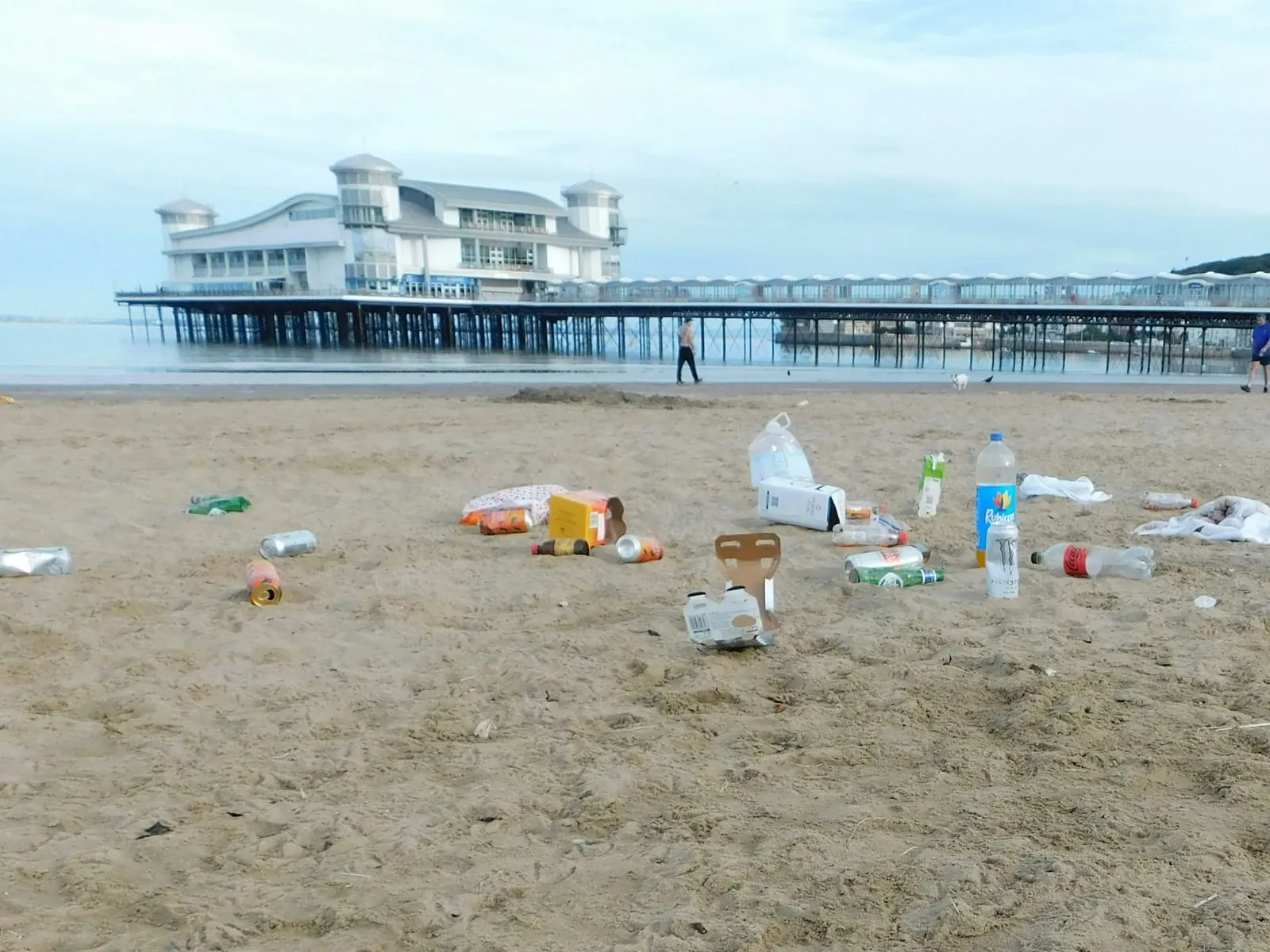
The way we live and work has changed hugely in one generation. We eat and drink a lot more on the move, order almost anything to the door in 24 hours, access cheap goods used once and then discarded, and travel around on e-bikes and scooters. Streets are full of packaging, roadsides are used as dumping grounds, and disposable vapes and nitrous oxide canisters are discarded in parks, with children consuming products never designed for them.
At the same time, the habits that once held communities together are fading. Fewer people volunteer than a decade ago, fewer give to charity. Only 11% of adults think their local area has improved in the last two years.
Three in ten adults now say their area has got worse to live in over the last two years, the highest share since 2013/14.
Volunteering
27% to 17%
Adults volunteering with a group or club at least once a month, 2013/14 to 2024/25.
Giving to charity
82% to 67%
Adults who gave money to charity in the previous four weeks, 2013/14 to 2024/25.
DCMS Community Life Survey, online and paper series, England, adults 16+. The survey was redesigned in 2023/24; DCMS still compares back to 2013/14.
Problems like these sit in an awkward place: too small and complex for national attention and too diffuse for any single council to solve. England now spends around £1 billion a year just cleaning up litter. IECR’s role is to be the centre of knowledge on solutions to these problems and to bring about effective, positive change at local and national levels.
Where environmental and social problems meet
The state of a neighbourhood tracks its circumstances. England’s Index of Multiple Deprivation ranks every neighbourhood on income, employment, education and skills, health, crime, access to housing and services, and the living environment. On most measures of civic and environmental life, the gap between the top and the bottom of that ranking is wide. Sources show almost three times as much litter in the most deprived fifth of areas as in the least deprived. In official surveys, 59% of households in the most deprived areas say rubbish is a problem where they live, against 24% in the least deprived, and people there are more than five times as likely to report high levels of anti-social behaviour.
Civic life follows the same lines. People in the most deprived neighbourhoods are half as likely as those in the least deprived to be proud of where they live, or to volunteer with a group or club every month, and fewer of them sign petitions or contact their council. Educational attainment draws a similar line. In 2025/26, 57% of adults with a degree took part in civic life, from signing a petition to answering a consultation, against 28% of those with no qualifications, and at the 2024 general election graduates were 11 percentage points more likely to vote than non-graduates, double the gap in 2019.
None of this means people in poorer areas care less. Informal help between neighbours is as common in the most deprived areas as anywhere. What differs are the conditions people live with, from income and educational attainment to the state of the street outside, and those conditions are bound up with how people behave. Some of the litter gap also reflects denser streets that are harder to clean, so policy aimed only at the behaviour can miss its causes. Unpicking those links, and finding which interventions change them, is at the centre of IECR’s work.
Pride in place
38%
of people in the most deprived neighbourhoods are proud to live there, against 79% in the least deprived.
Volunteering
11%
volunteer with a group or club every month in the most deprived neighbourhoods, against 23% in the least deprived.
Trust
18%
in the most deprived neighbourhoods say many of the people there can be trusted, against 63% in the least deprived.
Litter
2.8×
as much drinks and food litter in the most deprived fifth of areas as in the least deprived.
“Too small and complex for national attention and too diffuse for any single council to solve.”
Why it matters
Local streets have become a voting issue, and few of the fixes on offer have been properly evaluated.
In an Ipsos survey of adults in the English council areas that voted in May 2026, 53% said the condition of streets, roads and pavements would be very important to their vote. That made it the fourth most cited issue, ahead of housing (37%) and climate change (25%), and among over-55s it came first, at 67%. Asked about public services over the last five years, 55% said those in their own area had got worse, and 12% that they had got better.
People have noticed the state of their surroundings. More than three in four adults in England (77%) think litter has become more of a problem in recent years, and 62% think less pride in local community spaces is adding to it. Concern for the environment has not gone away, but urgency about national targets has fallen: the share of UK adults who want net zero reached sooner than 2050 fell from 54% in 2021 to 29% in 2025, although 64% still back a target of 2050 or sooner.
Politicians have responded. In 2026 the government published a Waste Crime Action Plan and raised the maximum on-the-spot fines for littering and fly-tipping in England, and opposition parties proposed measures from larger fines and vehicle seizure to camera enforcement and rewards for tip-offs. Few of these measures have been rigorously evaluated, and England has had no government-funded national litter survey since 2014/15 against which to judge them.
Local elections
53%
of adults in English council areas with May 2026 elections said the condition of streets, roads and pavements would be very important to their vote, the fourth most cited issue.
Over-55s
67%
of over-55s said the condition of streets, roads and pavements would be very important to their vote. No issue was cited more often.
Local services
55%
say public services in their own area have got worse over the last five years; 12% say they have got better.
Litter
77%
of adults in England think litter has become more of a problem in recent years.
The missing What Works Centre
Government already relies on a network of independent What Works Centres, each of which gathers the evidence on what works in its field and tells departments, councils and frontline services where the money is best spent: the Education Endowment Foundation’s toolkit on raising attainment, or NICE’s guidance on what the NHS should fund. Civic and environmental behaviour has no equivalent. No What Works Centre gathers the evidence on what changes how people treat shared spaces, or tells councils and departments which measures are worth paying for.
EducationEducation Endowment FoundationRuns and synthesises school trials, and tells schools what raises attainment per pound spent.
Health and careNational Institute for Health and Care ExcellenceSets the evidence-based guidance on which drugs, treatments and care the NHS funds.
Crime reductionCollege of PolicingReviews which policing tactics cut crime, for forces in England and Wales.
Local growthWhat Works Centre for Local Economic GrowthEvidence on which local interventions, from transport to skills, grow local economies.
Youth employmentYouth Futures FoundationEvidence on getting young people into good work, especially those facing disadvantage.
HomelessnessCentre for Homelessness ImpactEvidence on what ends homelessness, for councils and frontline services.
Children and familiesFoundationsEvidence to support families and keep children safely at home.
Later lifeCentre for Ageing BetterEvidence on improving later life across work, housing and health.
WalesWales Centre for Public PolicyEvidence for Welsh ministers and public services across policy areas.
Civic and environmental behaviourNo centreThe gap IECR is being set up to fill.
Evidence-led policies
Research came first, and policy followed. That is what IECR aims to support.
We work with national and local authorities to understand which policies most effectively change behaviour to improve communities and the local environment. We study the effectiveness of taxes, fines and enforcement to discourage littering and fly-tipping, and the benefits of positive messaging to change behaviour. We also work with the corporate sector to understand how producers and retailers can better educate and reinforce positive social engagement.
Policy interventions work only with an evidence base to support them. Smoking restrictions were built on decades of research, starting with Doll and Hill in the 1950s, and adult smoking has fallen from 46% in 1974 to 11% in 2024. Scotland’s minimum alcohol unit price was modelled by researchers at Sheffield before it became law, and the modelling proved right: alcohol-specific deaths fell 13%, with the biggest effect in the most deprived areas. The plastic bag charge followed evaluations of earlier levies in Ireland and Wales; bag use has since dropped 98%. In each case, research came first, and policy followed; this is what IECR aims to support. Without this research, government and councils are blind as to what is effective and how to implement policy on the ground.
Well-evidenced policy can narrow the gap between places as well as raise the average, as minimum unit pricing did. The sugar levy on soft drinks shows the same pattern: after it came in, obesity among girls in their last year of primary school was furthest below its expected level in the two most deprived fifths of areas.
ResearchPolicyOutcome
Smoking
Research1954 onwards
Doll and Hill establish smoking’s harm
Decades of research followed: the SCOTH reports on secondhand smoke (1998, 2004), the Royal College of Physicians’ Going Smoke-free (2005), and studies showing heart attacks falling where bans arrived.
led to
Policy1998 to 2017
White paper, advertising ban, smoke-free law, plain packaging
Smoking Kills (1998), the advertising ban (2002), the smoke-free law (2007) and plain packaging (2017).
resulted in
Outcome1974 to 2024
46% to 11%
Adult smoking
From 45.6% of adults in 1974 to 10.6% in 2024.
Minimum alcohol unit pricing
Research2010
The Sheffield Alcohol Policy Model
Modelled the deaths and admissions averted at each price point, and found a unit price would fall on the heaviest drinkers. Canadian evaluations linked higher prices to lower harm.
led to
Policy2018
Scotland’s minimum unit price
A statutory floor of 50p per unit, since raised to 65p.
resulted in
Outcome2023 evaluation
13% fewer deaths
Alcohol-specific deaths
Around 156 fewer a year, with the largest falls in the 40% most deprived areas, as the model predicted.
The plastic bag charge
Research2007 to 2013
Evaluations of the Irish and Welsh levies
Ireland’s 2002 levy cut bag use by over 90% (Convery et al., 2007); Cardiff University evaluated the Welsh charge (2013) and retail data showed a 76% fall.
led to
Policy2015
The 5p carrier bag charge in England
Introduced in October 2015, now 10p.
resulted in
Outcome2014 to 2025/26
98% fewer bags
Single-use bags issued
From 7.6 billion a year to 0.13 billion.
Our work
Four strands: diagnosis, comparison, independent evaluation, and use.
Our work has four strands. The first is diagnosis: working out why civic responsibility erodes and where action gets stuck, whether in public attitudes, council capacity, or how responsibilities are split between tiers of government. The second is comparison: looking at what other countries and councils have tried and which designs would transfer here. The third is independent evaluation. We assess interventions against matched comparison areas, as a body with no stake in the answer, because policies that are never evaluated tend to be repeated whether they work or not. The fourth is using the results through parliamentary briefings, cost-benefit assessments, and draft measures that departments and councils can utilise.
Click a strand to read more. Evaluation feeds back into diagnosis: policies that are never evaluated tend to be repeated whether they work or not.
Research priorities
Three areas where environmental and social problems meet, starting with litter.
Our research spans multiple areas covering environmental and civic behaviour. Our initial focus is on two interconnected environmental issues with a strong behavioural element: litter and fly-tipping. Incidents of both are increasing rapidly.
We also plan to work on societal and health issues. For example, what England’s under-16 sales ban will do to energy drink consumption, and how gig economy work affects wellbeing. And on public bodies: why some councils get results where others don’t, and how the structure and incentives of public bodies shape their performance.
The team’s early studies include a Treasury Green Book cost-benefit appraisal of a litter camera enforcement system on the motorway network. Research priorities include council-level studies on anti-litter policies, analysis of international approaches to litter and fly-tipping behaviour, and a predictive, location-based model for fly-tipping.
Across all three, we look at the social conditions behind the behaviour: deprivation, educational attainment, and how connected people feel to where they live. Energy drinks are a case in point. A 2024 review of 57 studies covering more than 1.2 million children and young people linked them to poor sleep, psychological distress and lower academic performance, and teenagers in more deprived areas are more likely to drink them. That makes England’s under-16 sales ban as much a question for education and inequality as for health.
Environment
Our initial focus.
Litter and the everyday neglect of shared spaces, which have a strong behavioural element.
Society and health
Planned work.
What England’s under-16 sales ban will do to energy drink consumption, and how gig economy work affects wellbeing.
Public bodies
Planned work.
Why some councils get results where others don’t, and how the structure and incentives of public bodies shape their performance.
Three priority research programmes
Three programmes come next, led by a council-level study that will rank the anti-litter measures councils can take by cost and effect: the evidence most needed in the most deprived areas, where litter is worst.
Programme 01 · Coming next · Twenty-four months
Council-level studies of the policies that change littering behaviour
A causal, costed ranking of the anti-litter measures councils can take, tested ward by ward.
Litter management is a local authority responsibility, but few authorities know what to do about it. There are no useful guidelines on which policies change behaviour, and there has been no government-funded national litter survey since 2014/15. We do know that the most deprived areas carry almost three times the litter burden of the least deprived. Four policies remain untested at scale: visible enforcement, bin infrastructure, behavioural prompts and community stewardship. What is needed is a causal, costed ranking of these interventions, tested against matched comparison wards.
The project
Six partner councils each adopt one type of intervention in three to five treatment wards, against matched comparison wards, over twelve months. Transect surveys to Code of Practice standards at baseline, six months and twelve months, with a persistence wave after funding ends, compare the state of litter against the baseline to establish which policies tackle littering behaviour on the ground.
Outputs
A detailed analysis of the measures local authorities can take to change littering behaviour, including a toolkit that councils can adopt, with briefings at national level for Defra, MHCLG and the LGA.
Collaborations and partnerships
Six partner councils, an external survey agency, an academic advisory panel, and engagement with Defra, MHCLG and the LGA.
Programme 02 · Coming next · Nine months
Analysis of international approaches to litter and fly-tipping behaviour
What around ten countries do differently, and which of it would transfer to the UK.
Litter and fly-tipping vary significantly between countries, and the countries that measured first can attribute impact. Ireland has monitored litter since 1999 and saw around 30% fewer cans after its 2024 deposit scheme; container litter in New South Wales has more than halved since its 2017 scheme; Singapore issued over 20,000 littering tickets in 2022. By understanding how the international community addresses these problems, we can adopt solutions the UK lacks.
The project
A systematic comparison of around ten jurisdictions across five levers: monitoring, enforcement, deposits, infrastructure and behaviour change. A structured desk review of official statistics, legislation and evaluations, plus fifteen to twenty interviews with regulators, monitoring bodies and researchers. Effects are compared only against each country’s own baseline, with no cross-country league table, and full source lists mean every claim can be traced.
Outputs
A comparative analysis of ten countries identifying differences in policies and outcomes, and policy-transfer briefings on each lever for ministers, officials and MPs, with an explicit assessment of what would transfer to the UK.
Collaborations and partnerships
Regulators and monitoring bodies in around ten jurisdictions, two academic peer reviewers, Defra and select committees.
Programme 03 · Coming next · Nine months
A predictive, location-based model for fly-tipping
Where fly-tipping happens, why it happens there, and what councils can do about it.
Local authorities have few solutions to the rising rate of fly-tipping in the UK, and little is known about what drives high rates: social deprivation, education and messaging, the cost, usability and distance of amenity sites, and awareness of commercial waste disposal. What is needed is a detailed analysis of where and why fly-tipping occurs, through a geospatial, predictive model that identifies where in the country rates are greatest, why, and how to reduce them. IECR’s initial research suggests that local authorities with the lowest density of recycling centres have over three times the prevalence of fly-tipping of those with the highest.
The project
We will develop a geo-coded AI analysis of fly-tipping incidents using private and public data, including ClearWaste, Defra’s fly-tipping statistics, the Environment Agency’s Waste Data Interrogator and Freedom of Information requests to local authorities. Alongside it we will conduct the first complete census of household waste access across all of the UK’s roughly 190 waste disposal authorities: booking rules, charges, capacity, permitted vehicles, permits and opening hours. The two feed a model of the causes of fly-tipping that controls for deprivation, urbanity, housing type and access to disposal sites.
Outputs
Recommendations for local authorities on improving site access and on measures to reduce fly-tipping, with a geospatial analysis of how social conditions and access to disposal and recycling affect rates.
Collaborations and partnerships
We will seek collaborations with the likes of UCL’s Geography department, Imperial College’s Mathematics department, waste-reporting apps such as ClearWaste, and the Local Government Association.
“Policies that are never evaluated tend to be repeated whether they work or not.”
How we work
A project team around each question, and results that reach the public.
We build a project team around each question, working with academics, councils, other NGOs and the public, through surveys and citizen science. The results come out as reports, media work and events, both in person and online.
Governance
Being established as a charity, with independent trustees from six fields.
IECR is being established as a Charitable Incorporated Organisation with the Charity Commission for England and Wales. The trustees are the charity’s voting members, and the constitution includes independence. They come from local government, law, behavioural science, environmental policy, finance and the charity sector.